

A song can sit half-finished for months when the practical pieces are missing: a dependable room, the right backline, time to test arrangements at volume, or someone who understands where the recording is getting stuck. A female artist residency programme UK artists can genuinely use should address that reality. It should create protected time and proper access to the tools that turn ideas into finished, release-ready music.
For female creatives, a residency can also offer something that is harder to put on a spec sheet: a working environment where taking up space, leading a session, trying a production decision or changing direction does not require explanation. The strongest programmes combine both sides. They make room for creative risk, while giving artists the infrastructure to make meaningful progress.
What a female artist residency programme UK should provide
A residency is not simply a reduced-rate room booking with a new label attached. It should have a clear purpose, a defined period of support and enough consistency for an artist to build momentum. That might mean developing a single, preparing an EP, refining a live set, writing with collaborators or moving a project from rough demos to focused recordings.
The format matters because every artist works differently. A singer-songwriter may need a piano, vocal booth and quiet recording time to develop a vocal performance. A band may need full rehearsal access with drums, amplifiers and PA to tighten transitions before tracking. A producer could need uninterrupted sessions to shape arrangements, edit vocals and make decisions that are hard to reach in scattered hourly bookings.
Useful programmes make their resources clear from the start. Artists should know what rooms they can use, how much time is available, whether engineering support is part of the process and what equipment is on hand. Ambiguity is rarely creative. Clear access lets an artist plan properly, bring in the right collaborators and arrive ready to work.
Time that is long enough to matter
One afternoon can spark an idea, but it is seldom enough to properly test it. Music development often happens in stages: write, play, record a guide, listen back, rethink, rehearse, then record again. A worthwhile residency gives an artist enough continuity to follow that cycle rather than forcing every decision into a single session.
This does not always mean consecutive days. For an artist balancing shifts, study, childcare or touring commitments, regular sessions over several weeks may be more useful than one intensive block. For a band with a defined recording plan, a concentrated run of studio days could be exactly right. The best structure depends on the project, but the time needs to be substantial enough to move the work forward.
Equipment that supports the music, not the marketing
Studios are only useful when the setup matches the work. A credible residency space should be ready for real sessions, with reliable recording capability and practical equipment rather than a beautiful room that leaves artists bringing half their own rig.
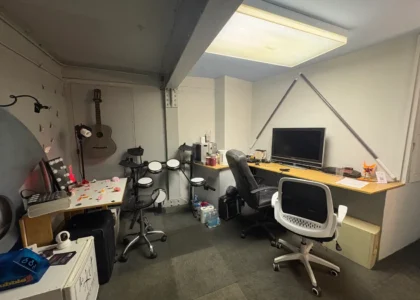
For many projects, that means a drum kit and amplification for rehearsals, microphones and mixers for tracking, MIDI keys for production, and a treated space where vocals can be recorded with focus. Access to a grand piano can open a different writing route altogether, particularly when a demo has been built around programmed parts and needs a more human performance.
There is a trade-off here. A fully equipped room can speed up the process and make larger ideas possible, but it helps to arrive with a plan. Decide what needs to be captured live, what can be built in production, and what you want to leave with after each session. Good preparation protects creative time without making the process rigid.
Creative support should be practical
Support is most valuable when it meets the artist at the point of need. That could be an engineer helping achieve a confident vocal take, a producer helping identify why a chorus is not landing, or informed feedback on whether a track is ready for mixing. It is not about taking control of the artist’s voice. It is about providing a second set of experienced ears when the work has become too close to judge clearly.
For emerging artists, technical support can remove a major barrier. Learning to communicate what you hear in your head, choosing reference tracks, understanding the difference between a demo and a final master, and planning a recording session are all skills that build confidence over time. An artist does not need to know every microphone or signal path to lead a strong session. They do need a space where questions are welcomed and their ideas are taken seriously.
For more established artists, support may be less hands-on. They might need dependable facilities, efficient engineering and the freedom to run their own process. A good residency leaves room for both. It should not assume that every female artist needs the same kind of guidance, or that she is only at the beginning of her career.
Why a dedicated space changes the work
Working from bedrooms, shared flats and borrowed rooms has produced brilliant music, but it also has limits. Noise restrictions interrupt rehearsal. Equipment has to be packed away. Collaborators cannot always fit in the room. A track may remain in demo form simply because there is nowhere to push it to its next stage.
A dedicated creative base changes the rhythm of a project. You can rehearse the difficult middle eight until it feels natural, record a live take while the band is locked in, then listen back through proper monitoring. You can compare two vocal approaches without rushing. You can make a mistake, keep rolling and find the stronger version on the next pass.
Cartel Studios’ Artist Residency Programme for female creatives is built around this practical need for space, equipment and artist development. Based in Acton, it gives musicians and multidisciplinary creatives a serious West London base to rehearse, record and develop work without treating studio time as an inaccessible luxury.
Making the most of a residency
The most productive residencies start before the first session. Set a realistic creative goal, but leave enough flexibility for the project to reveal what it needs. “Finish an album” may be too broad if you only have limited time. “Record final vocals for two singles, refine the live arrangements and leave with a clear mixing brief” is specific, achievable and still creatively useful.
Bring your current demos, lyric versions, session files and references in one organised place. If you are working with other musicians, agree the key, tempo and arrangement before the room clock starts. If the purpose is writing rather than finishing, decide what you want to explore: stronger hooks, a new sonic direction, live instrumentation, vocal confidence or a more coherent set of songs.
It also helps to build listening time into the schedule. Do not fill every minute with playing or recording. A break between takes can make an obvious issue audible. End each session by naming the next action, whether that is rewriting a verse, booking a drummer, comping vocals or preparing stems for a mix. Progress comes from the decisions made after the session as much as from the session itself.
More than a room of your own
The value of a female-focused residency is not that it separates artists from the wider industry. It is that it can correct for the uneven access and confidence barriers that still shape who gets time, equipment, technical trust and creative authority. The aim is not a softer version of professional music-making. It is more artists being able to participate in it on serious terms.
That is why the best programmes are measured by what artists are able to make, learn and carry forward. A finished track is a strong result. So is a better rehearsal process, a clearer production vocabulary, a new collaborator or the confidence to book the next session and lead it decisively.
If you are considering a residency, look beyond the headline. Ask whether the space, time and support suit the work you actually want to make. The right programme will not manufacture your voice for you. It will give that voice enough room to become unmistakably yours.