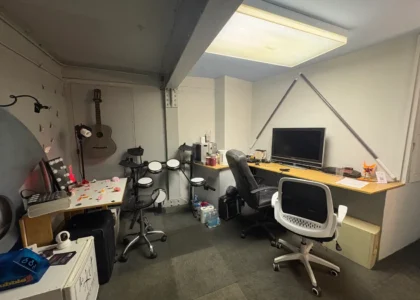


A rehearsal can fall apart before the first song if half the session disappears into carrying amps upstairs, hunting for a working lead or trying to make a vocal heard over cymbals. The best band rehearsal rooms Acton can offer are not simply empty spaces by the hour. They give a band the practical set-up and headspace to arrive, plug in and make decisions.
For emerging acts, that difference matters. Rehearsal time is often where arrangements become tighter, tempos settle, live sets find their energy and half-finished ideas either grow into songs or get left behind. A good room will not write the material for you, but it can remove the friction that stops you doing your best work.
What a rehearsal room needs to do
A useful rehearsal space starts with the basics: enough room to play properly, equipment that works and a PA capable of giving vocals their place in the mix. Yet the right room depends on what you need from the session. A four-piece preparing a loud live set has different priorities from an acoustic duo arranging harmonies, or a producer bringing in vocalists to develop a track.
For a full band, reliable drums, guitar and bass amplification, microphones, a mixer and a PA are usually non-negotiable. Hiring a room with this equipment already in place saves travel, reduces set-up time and means players can focus on the performance rather than logistics. It also gives everyone a more realistic picture of how the songs sit together.
Space matters too. If the drummer cannot hear a cue, the singer is pushed into a corner and guitarists have no room to move, the rehearsal becomes an endurance test. A practical room lets every player hear enough of the band to respond musically. It should feel workable rather than precious: somewhere you can try a new structure, stop halfway through a chorus and run it again without worrying about getting in the way.
Choosing band rehearsal rooms in Acton
Acton is a useful base for artists across West London, particularly when a rehearsal needs to fit around work, gigs, teaching or recording sessions. It is within straightforward reach of Ealing, Chiswick, Hammersmith, Brentford, Harlesden, Wembley, Kensington and beyond, while also being accessible from the A40 and M40 for musicians travelling in with gear.
When comparing band rehearsal rooms Acton has available, look beyond the headline hourly rate. Ask what is included, whether the equipment is suited to your line-up and how much time you will lose setting up. A seemingly cheaper room can become poor value if you need to hire backline separately, bring every cable yourself or spend the first 30 minutes solving monitoring problems.
It is worth checking the scale of the room against the job. A smaller space may be ideal for writing, pre-production or a stripped-back rehearsal, while a bigger room makes more sense for a full live set, a band with keyboards or a session where you need to practise movement as well as music. If you are rehearsing before a run of shows, choose the room that allows you to play the set as it will be performed, including transitions, backing tracks and vocal cues.
Availability is another practical consideration. A regular slot can be valuable for a band building momentum because it creates a reliable working rhythm. On the other hand, a concentrated block may suit an act preparing for a tour, audition, showcase or recording project. The right approach depends on whether you are developing material gradually or need to solve everything within a short, focused period.
Rehearse with a clear outcome
A rehearsal is more productive when everyone knows what success looks like before they arrive. That does not mean over-planning every minute. It means agreeing whether the goal is to tighten five songs, finish one arrangement, prepare a live set or record usable references for later production.
Start with the song or section that needs the most attention, while everyone is fresh. If a chorus feels weak, be specific about why. Is the melody being buried? Does the bass part need more movement? Is the final chorus too long? Broad comments such as “it needs more energy” can be useful as a first reaction, but the work begins when the band turns that reaction into a musical change.
Recording short takes during rehearsal is one of the simplest ways to make better decisions. A mobile phone recording can reveal timing issues and cluttered arrangements that are less obvious in the room. A more considered rehearsal recording can go further, helping you review vocal harmonies, test song order or send references to a producer before a studio session.
Do not try to fix every detail in one pass. Run the song through, identify the one or two biggest issues, work on those, then play it again from the top. Repetition without a decision is where rehearsal time gets expensive. Repetition with a purpose is how a band starts sounding like a unit.
Give the vocalist a proper place in the room
Vocalists often carry the clearest measure of whether a rehearsal set-up is working. If the PA is underpowered or the monitoring is poor, singers tend to push too hard, lose confidence or stop experimenting with phrasing. That can make an arrangement feel less developed than it really is.
Set vocal levels early and leave room for the singer to be heard without straining. For groups using harmonies, take time to rehearse them separately before dropping them back into the full arrangement. This is especially useful when the band is moving from demo vocals to a live version of the song, where breath, projection and timing all change.
From rehearsal to recording without losing momentum
The strongest creative spaces make it possible to move naturally from one stage of a project to the next. Once an arrangement is working in rehearsal, the next question is usually whether it is ready to record, or whether a few more sessions will save time and money later.
Pre-production is the bridge between those stages. It might involve making a solid rehearsal recording, checking tempos with a click, deciding on keys, mapping out backing vocals or identifying which parts should be played live and which should be programmed. This work does not remove spontaneity. It gives you a better foundation from which to capture it.
At Cartel Studios, artists can use a large practical space across three rooms to rehearse, record and develop material in one place. Alongside equipped rehearsal rooms, the facility offers recording support, engineering, microphones, a vocal booth, MIDI keys and a vintage grand piano. For a band, that can mean moving from testing an arrangement in the room to capturing a proper demo or beginning a release-ready recording project without losing the momentum built during rehearsal.
This route is not always necessary. Some bands benefit from keeping rehearsal and recording separate, particularly if they need a change of environment before committing to takes. But for artists working to a deadline, preparing an EP or developing a sound with a producer, having those options close together can keep the process focused.
Make every booked hour count
The most prepared bands arrive with their songs organised and their practical needs discussed. Bring a current setlist, lyric sheets where needed and a clear idea of any gear you are using beyond the room’s standard set-up. If you are working with tracks or programmed elements, test the playback route early rather than leaving it until the final ten minutes.
Take breaks, but use them well. A short reset can help everyone hear a song with fresh ears. Long debates over taste can drain a session, so give ideas a fair test in the room. Play the changed section, record it and listen back. The song will often tell you more quickly than an argument will.
Keep a note of what changed. It can be as simple as a shared document with tempo, key, arrangement notes and a list of decisions still to make. That is particularly useful when members cannot attend every session, or when you are preparing to bring in an engineer, producer or dep musician.
A rehearsal room should give your band more than somewhere to make noise. Choose a space that supports the way you actually work, arrive with a purpose and leave with at least one decision that moves the songs forward. The next session will feel less like starting again and more like building on something real.